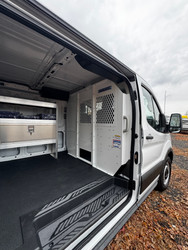
Simplifying The Cargo Van Upfit Process
12th Dec 2025
Buying your empty cargo can be exciting; however, it can be daunting to wonder where to start your upfit. From floors to shelves, and safety features, you may not know what should come first or what the options even are. By the end of this guide, you’ll know how to set up your van interior with the right flooring, shelving, safety partitions, and accessories for your trade.
1. Start with Interior Finishings (Floors, Walls, & Lighting)
When beginning your upfit, the first thing you’ll want to consider is any interior finishings you are looking to add. Adding in liners for your walls, ceiling, and door, serves not only as protection for your van, but can also make your van more pleasant and safe to take with you every day.
Do I Need Insulation in My Cargo Van?
If deciding whether or not you need insulation for your cargo van, the answer depends. You’ll definitely want to add some kind of wall protection; it’s just a matter of whether or not you want this protection to also be insulated. Adding in wall liners can help protect your van from damage, as well as help deaden sound, or even insulate the cargo area, depending on the option you choose. We offer two options for interior liners: VanLiner & Duratherm.
VanLiner wall, door and ceiling liners are non-insulated panels of rigid plastic with a textured finish. Installing them protects the interior walls of your van from damage and dents, as well as helps to dampen sound. These liners are highly durable and impact-resistant, making them the perfect option when looking for interior protection.
Duratherm insulated kits for your walls, ceilings and doors are exactly what they sound like: insulated panels. They are made from ¼” heavy-duty rigid wall panels that have an ⅛” foil/foam insulation layer. This is the perfect option if you are transporting cargo that needs to have a bit of temperature control, or if you find yourself working inside your van from time to time. Duratherm kits also provide sound deadening as well as an R4 equivalent thermal barrier. In addition to the insulation factor, their textured surface is also scratch and impact-resistant, making for a durable option to protect your van.
Focus on Flooring
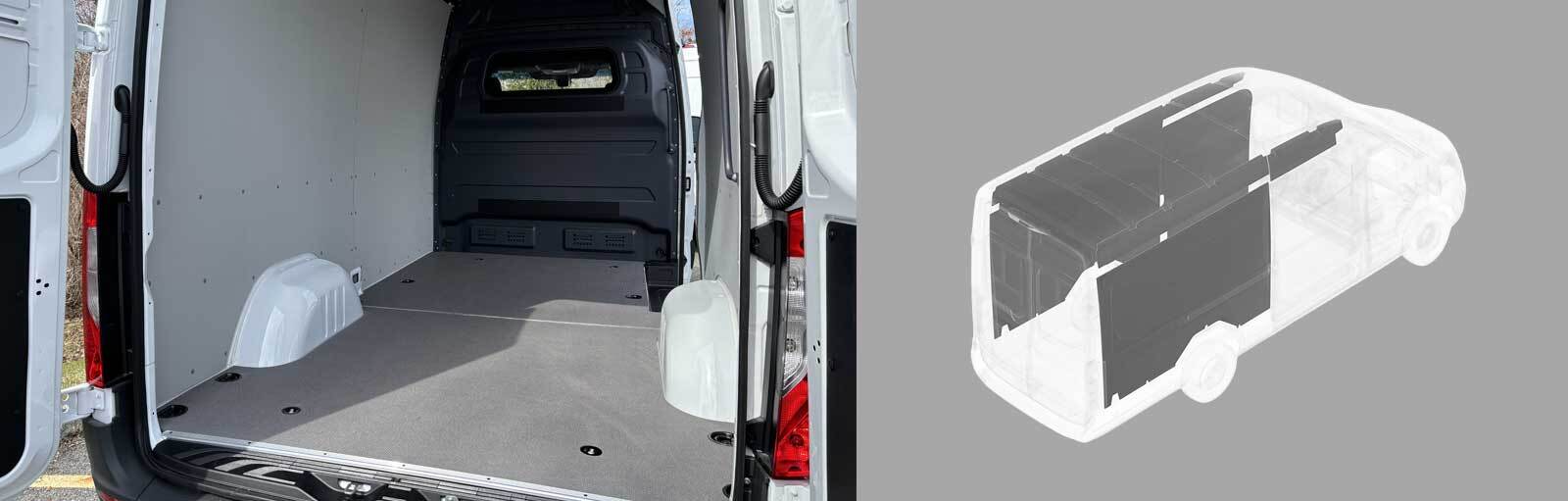
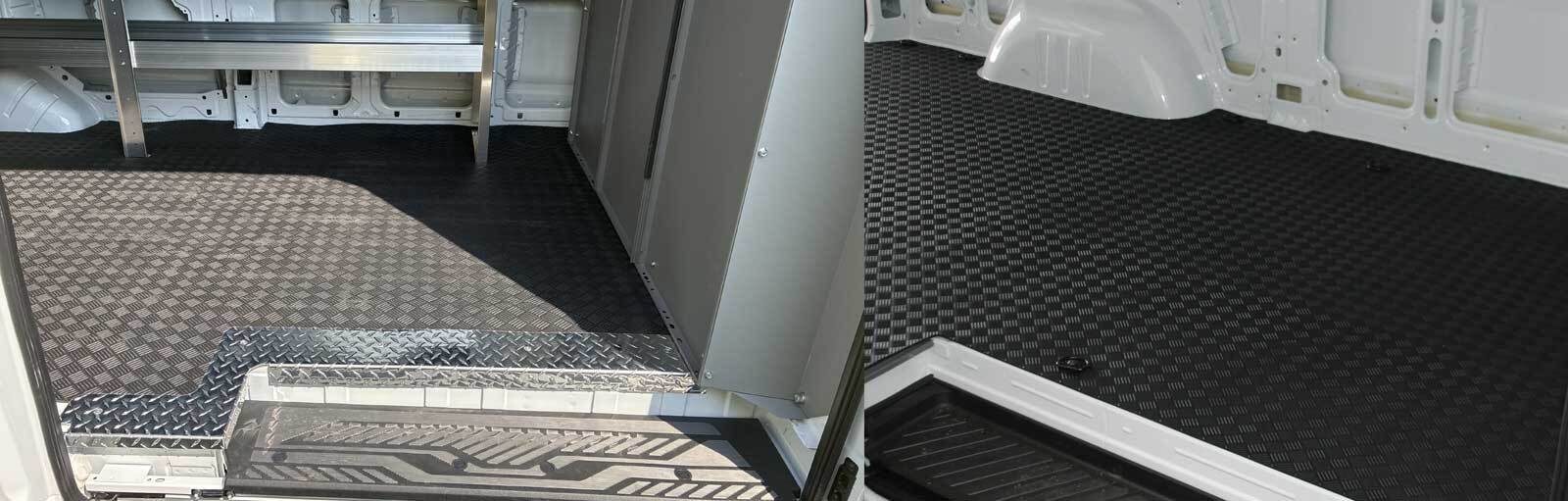
The two main options we offer for flooring for your cargo van include a rubber floor mat, and a Stabiligrip composite floor. The rubber floor mat increases traction to prevent slips and shifts in cargo, as well as resists oils and chemicals. The Stabiligrip composite floor is a hard floor equivalent to that of a wood floor, but with additional benefits like maximum traction, moisture resistance, and being rot proof. Additionally, they are chemical resistant and can help decrease road noise.
Whether you go with either option, you’ll want to consider if you want side and rear aluminum diamond plate sills. These provide protection to the floor of the cargo van where the traffic is highest; at the entry/exit points of the van. Additionally, compatible with either option, are wheel well covers, which provide protection, as well as decrease road noise, and an additional insulation barrier to compliment interior liners.
Securing Cargo & Lighting
When considering your wall and flooring options, before you bring in any shelving units, you may also want to consider whether you want any lighting, as well as logistics equipment.
Adding lighting to your van means your team can continue to be efficient and productive well into the evenings if it’s gotten dark out. Illuminating the van can also help prevent injuries. You may be wondering, ‘What’s the best lighting for the inside of a cargo van?’, and the answer depends on your van setup.
Strip lighting and motion sensor lighting are great options, but be aware that strip lighting is not compatible with ceiling liners, and motion sensor lighting is the recommended option if going with Duratherm ceiling liners.
Incorporating aluminum lashing rails to your walls adds versatility, where you can attach ratchet straps and moveable tie-down rings to make for a durable way to secure cargo, to make sure everything is safe and secure.
In reference to safety, window grills may also be a great option for your cargo van. In addition to protecting the glass from cargo damage or cracking while in transit, this can also deter burglaries to your van, bringing an extra sense of security that your valuable tools and cargo are protected.
2. Add a Safety Partition (Bulkhead)
Often also referred to as bulkheads, safety partitions are what’s between you, the driver up in the cab, and your cargo in the back. To protect yourself from any cargo that shifts during transport, partitions ensure that everything in the back stays there. Depending on the type you select, partitions with a locking door can even provide added security to make sure that even if someone gets into the cab, they cannot access the cargo.
Choosing Your Partition
When choosing your partition, there are several factors to consider:
- Do you want steel, aluminum, or composite?
- Do you want straight, contoured?
- Do you want to be able to see or access the cargo area with a door or window option?
Your needs and trade will likely guide your decision on which partition will make the most sense for your cargo van.
Steel, Aluminum, or Composite?
While steel, aluminum, and composite partitions all have their time and place, let's get into the differences.
If you want a more “sturdy” look and feel, steel is the tried and true long-standing option in the industry; however, steel can be a bit heavy. For a more lightweight and just-as-durable option, you may want to opt for aluminum.
Composite partitions offer a “perfect fit” that improves climate control and noise reduction in your van. All will offer a rattle-free design to make your ride as smooth as possible, no matter which one you choose.
Here are the key points to remember when choosing your partition’s material:
- Steel - durable and heavy
- Aluminum - durable and lightweight
- Composite - best for climate control & noise
Straight or Contoured?
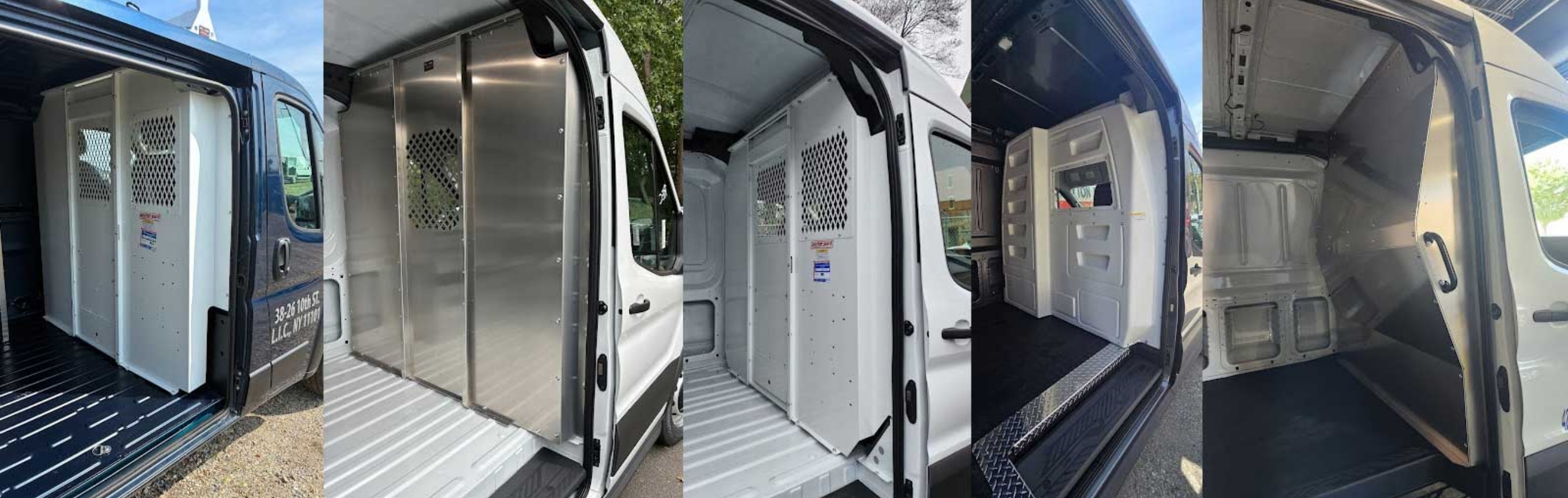
The main difference between a straight and a contoured partition is their shape and how this affects the cab area.
A straight partition is just that: straight and rigid, and there are options in all 3 of the materials we discussed above. These are sometimes seen to inhibit driver comfort a bit by restricting how much setback there is from the cab seats, with the focus being to maximize cargo storage area.
Contoured partitions bring an innovative design that strikes a balance between the need for both driver comfort and storage space. While being thinner near the bottom and getting wider towards the top, this maximizes seatback travel while increasing cargo floor area. Contoured partitions are available in any of the 3 materials as well.
Windows and Doors
When deciding whether or not you want a window or door on your partition, think about whether you want to just see your cargo or access your cargo from the cab. If neither of those apply to you, you likely don’t need either.
If you’d like to simply see your cargo, there are window options for both straight and contoured partitions available in all 3 materials.
When looking at having a partition with a door, this eliminates the option to have a contoured partition, and also narrows you down to only steel and aluminum choices for material. Swing door partitions are a great option as they can lock to secure your cargo fully, but you can get back there when needed. There is also the option to have no door and have a pass-through for ease of access.
3. Choose Your Shelving Package
When choosing a shelving package for your van, one of the top questions on your mind should be “how much does this weigh?” With your cargo van shelving system likely being the heaviest piece of upfit equipment you’ll add to your van, it’s essential to consider the material you choose carefully. Adding extra weight means using extra fuel and eating up available payload you could be using for cargo and tools.
Which Material Should I Choose for My Cargo Van Shelving Package?
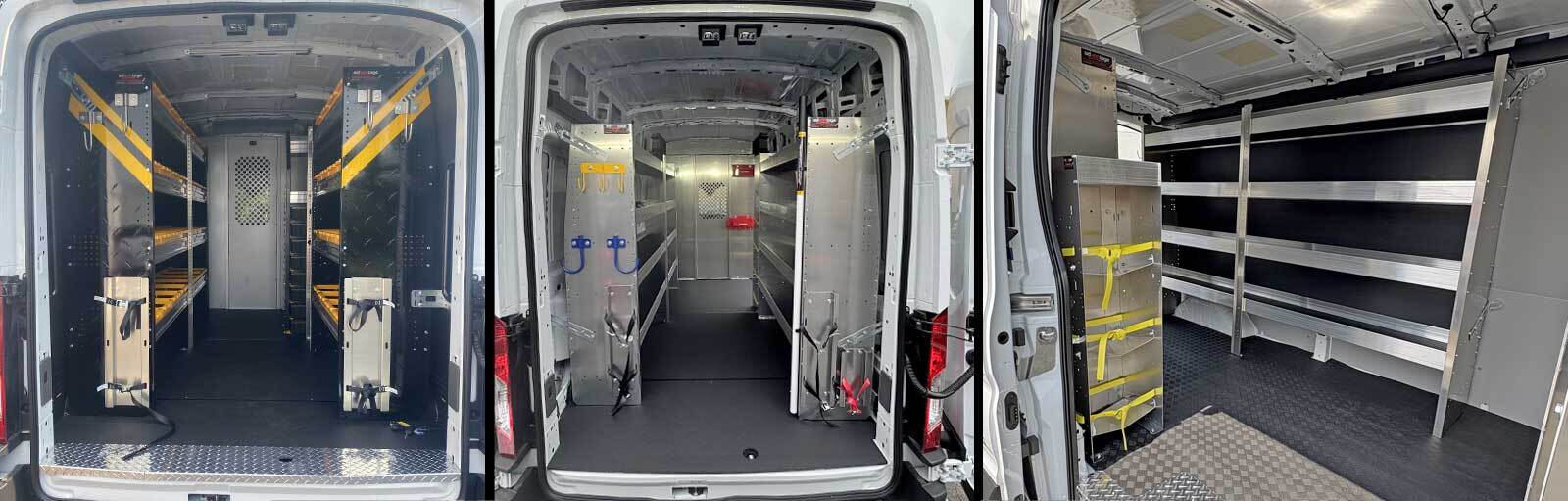
Traditional steel, steel-aluminum hybrids, and all aluminum are your options for your shelving packages. Traditional steel is the heaviest of the three, typically weighing between 450-700 lbs; the steel-aluminum hybrid is in the middle, with all aluminum being the lightest option at typically less than 200 lbs. When your van only has between 3300 - 4400lbs of payload capacity, going all aluminum to leave up to 95% of payload available is often the best option.
What is the Best Shelving for HVAC, Plumbing, or Electrical Vans?
After you’ve decided on your material, the type of shelving package you choose for your cargo van upfit is what will allow you to customize it for your trade’s needs. At Advantage, we have pre-made packages for popular trades such as HVAC, plumbing, electrical, as well as general service. For example, HVAC packages feature large bottle holders and refrigerant racks, whereas plumbing packages include a lot of organizational elements for small parts storage. No matter your trade, a premade package will likely work for you, and if not, you can always build out your own, tailored to your needs.
4. Add Time-Saving Interior Van Organization Accessories
Now that your shelving package is out of the way, you can consider some interior van organization accessories for your cargo van that will make you more productive and organized throughout your workday. Efficiency is everything, and saving just 5 minutes each day can amount to a whole 21 hours gained per year - almost a whole day!
Drawer Systems & Cabinets
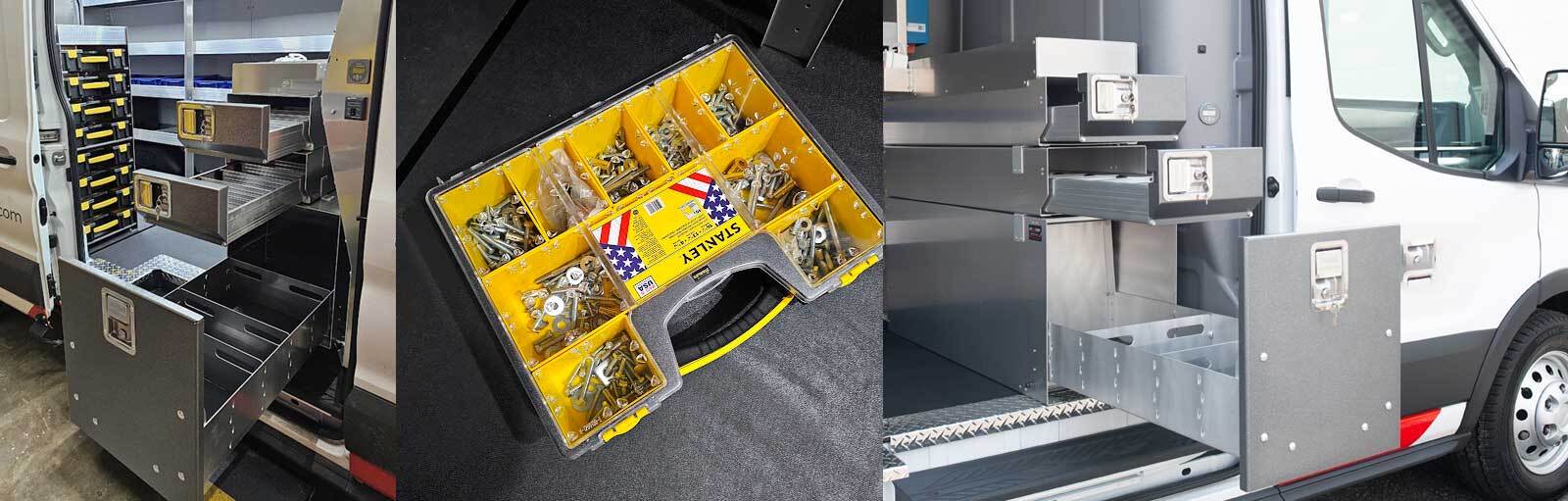
Drawer systems can be great options for items you need to be able to access quickly during your workday, such as power tools or workbags, but still want the peace of mind that they’re secure. Setting these up as side door drawer systems in particular maximizes your space by opening out of your side door, for easy access from outside your van. To maximize every inch of these units, there are stackable options with a parts drawer stacked on top of a tool drawer, as well as the ability to add a tray or worktop to cover them.
Drawer cabinets are ideal for storing smaller items, with 2 or 3 drawer options. These units include latching drawers with ball bearing slides and a key lock for added security for valuables. You have the opportunity to mount them individually or have the option to stack them. For super small parts, we also offer a 9-drawer option with rattle-free plastic drawers with dividers.
What are Partskeepers For a Work Van?
Parts keepers are grab-and-go cases that hold small parts that you can easily bring with you to and from the site, minimizing trips back to the van during a job. You have the option to add single parts keeper units onto your shelving units, or we offer parts keeper cabinets that can hold between 4-8 cases, with some even having 1-2 additional shelves on top for extra storage.
Bottle Holders
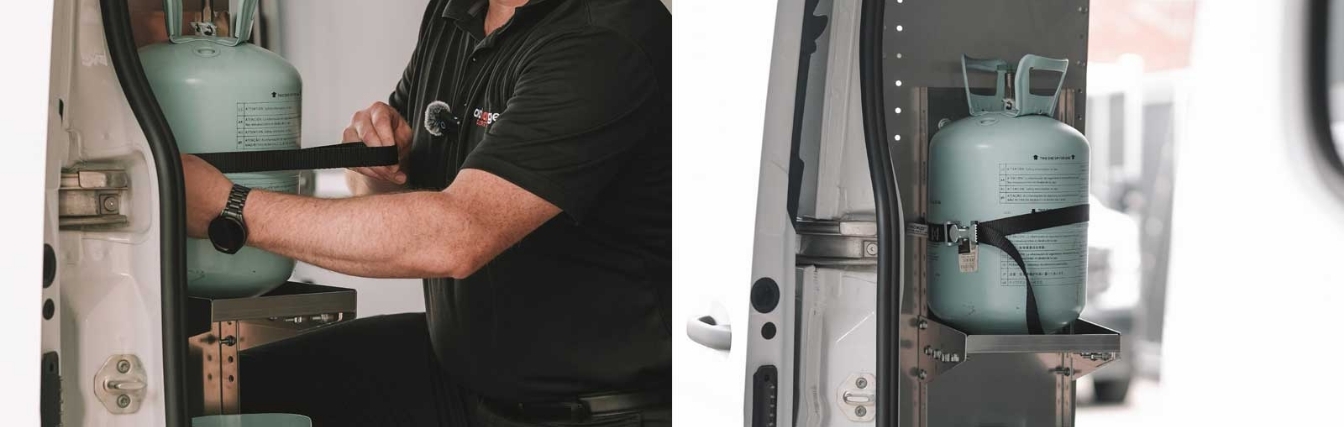
If you need to carry refrigerant or tanks in your cargo van, the right bottle storage is essential. For bottles, we have options for both small and large bottle holders, with some being ideal for MC tanks, and others for B tanks and nitrogen tanks.
Two-level refrigerant racks are perfect if you need to keep your refrigerant tanks vertical and compliant. Additionally, we have three, four, and five-level racks that offer horizontal storage for 30 and 50-lb refrigerant tanks.
Shelving & Cab Accessories
Taking a look at some of the smaller accessories, but also some of the most important, you’ll definitely want to personalize your shelves, as well as your cab area.
For shelving units, you can add locking doors to provide a security factor, as well as dividers for additional organization on your shelves. You can’t forget plastic bins, which all include a center and cross divider. Additionally, swivel and fixed hooks are available, as well as movable hooks that clip to the shelving lip. Two large movable hooks can even be utilized to hang a ladder from the shelving unit.
To make the most of your cab area, consider adding paper holders for easy access to contracts and proposals, or a cab box organizer to hold your valuables during the work day on a job. Grab handles are also a great option to ensure safety for your crew when getting into the vehicle.
5. Roof Equipment - Ladder Racks & Cargo Carriers
To keep your aisle space in your van clear and open, you’ll definitely need a place to store ladders and long pieces of cargo like piping, wood, etc. Finding the right one can be tricky, as there are quite a few options, but we’ll walk you through it.
Variations in Roof Racks
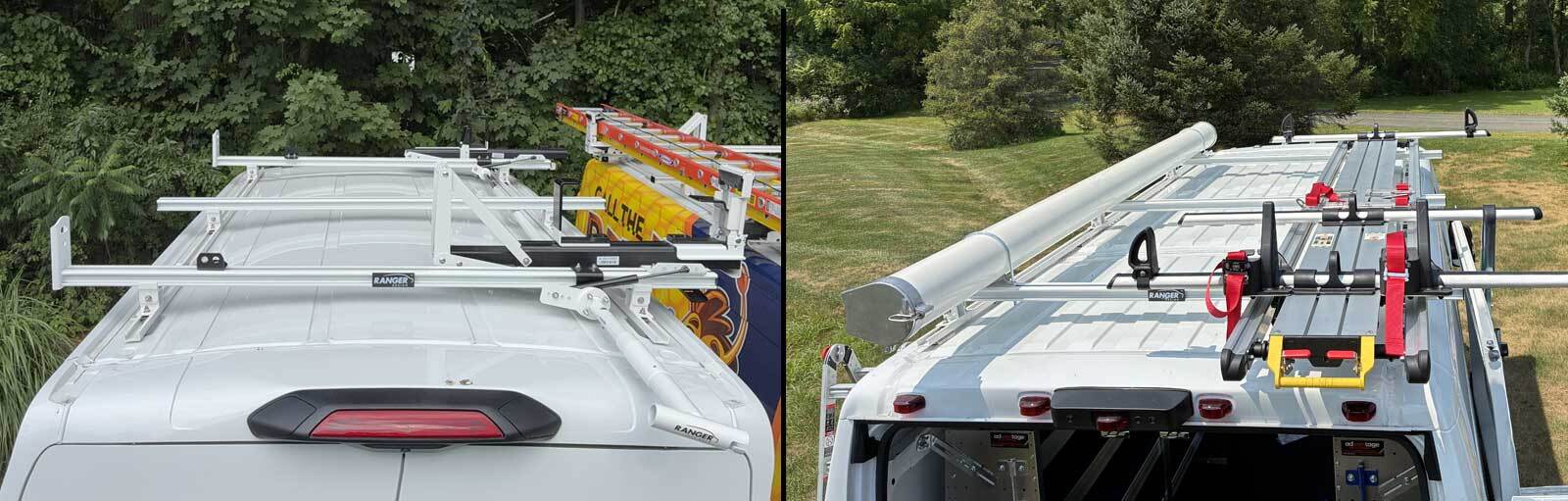
One of the most popular roof racks on the market is the all-aluminum MaxRack ladder rack that has single and double side drop-down options. With an ergonomic removable rotation bar, it makes it easy when loading and unloading a ladder. Similarly, the ErgoRack also has a removable rotation bar, as well as single or double drop-down options, but is made of aluminum and steel.
There is also a rear deploy option with the Access Stow, which features rust-free aluminum and stainless steel construction. These are ideal for long extension ladders up to 32’ or step ladders up to 10’, due to their fast and easy ergonomic operation. Aerodynamically designed roof decks and rust-free aluminum cargo racks act as roof storage for any type of load.
Roof Accessories
To finish off your roof storage, adding the right accessories can be a big help in the long run. With available options compatible with cargo racks or roof decks, an access ladder ensures safe and easy use of these units when loading and unloading cargo. Conduit carriers offer a secure place to store long pieces of pipe, tubing, and electrical conduit, lessening the load that needs to be stored inside of your van. If you’re going with a roof deck option, it's recommended to have 2 ratchet tie downs per side for optimal security of your load.
6. Finish with Exterior Accessories: Steps & Running Boards For Safety
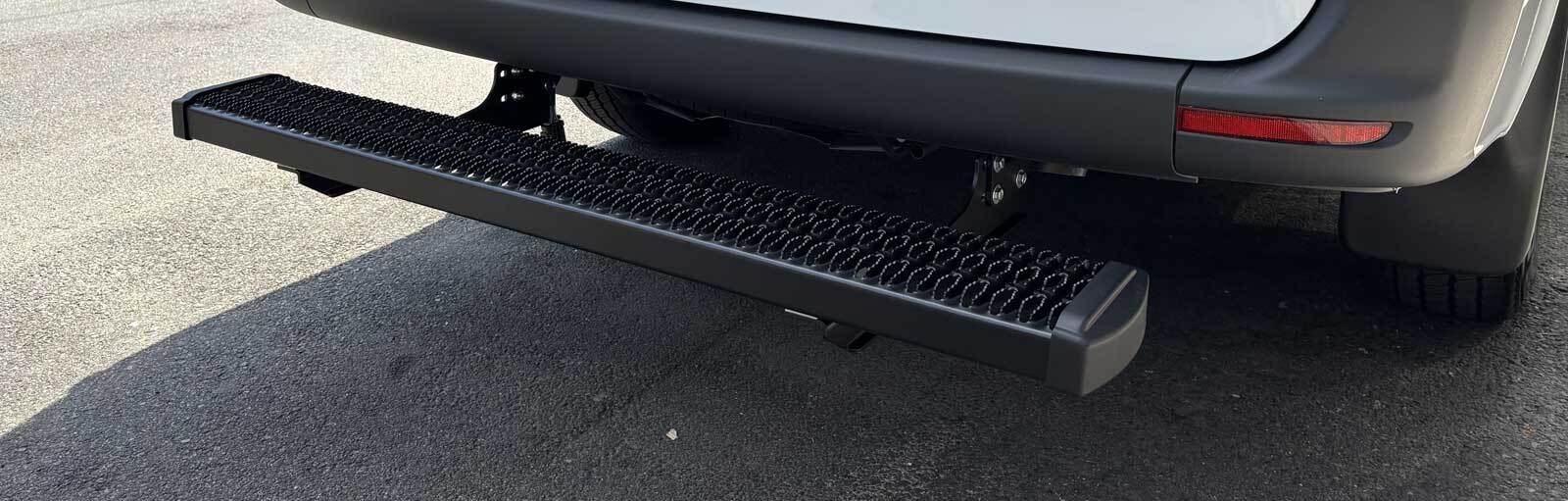
Running boards and steps can help to enhance safety and make it easy to get into and out of your cargo van. Grip Step running boards are a great option for your side door with a 7” wide stepping surface with an open tread design for maximum grip. For a rear door step, the aluminum Grip Step and steel Max Step with a reflective strip are great options. In addition to the safety element they bring, having steps on your van makes all the difference and eases the process of loading cargo into your van.
Need More Help?
We hope this guide can serve as a checklist for your next cargo van upfit. If you find your needs exceed what we’ve laid out here, feel free to contact us, and we can point you in the right direction. Find more information, product support, and expert advice in our Resources or Contact Us with any questions. Explore our full range of cargo upfit solutions to get started!
FAQs About Cargo Van Upfitting
What is a cargo van upfit?
A cargo van upfit is the process of adding shelves, flooring, partitions, and accessories to customize your van for the work you do, so you can be as efficient and organized as possible.
How much does a van upfit cost?
Costs range widely ($1,000–$10,000+) depending on your choice of installing flooring, shelving, partitions, and accessories.
What is the best cargo van shelving material?
Aluminum is often best—it’s lightweight, durable, and maximizes payload.
Do cargo van walls have to be insulated?
While a cargo van does not have to have insulated wall liners, it is important to have some kind of wall liners to protect your van. Whether or not insulation is needed would depend on your trade/needs.