HVAC Van Setup: Safe Storage for Refrigerant & Gas Cylinders
25th Jun 2026
HVAC service vans carry a lot of equipment every day – refrigerant cylinders, recovery tanks, nitrogen bottles, brazing gases, tools, fittings, and replacement parts. Without proper storage, those cylinders can shift during transit, take up valuable workspace, and create safety risks inside an enclosed cargo van.
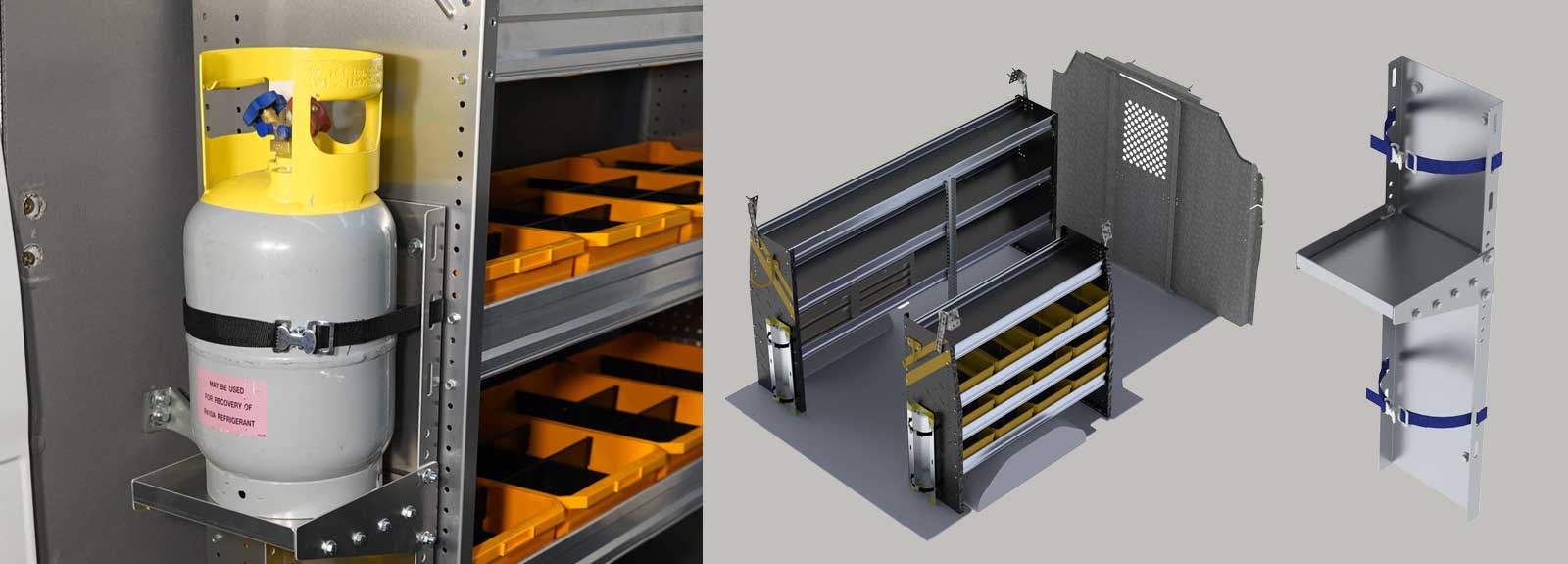
This guide covers why cylinder storage deserves deliberate planning in any HVAC van setup, the specific risks that come with transporting cylinders in enclosed service vans, and practical guidance on securing, ventilating, and organizing cylinders to support safer, more efficient daily work.
Why cylinder storage matters in HVAC vans
HVAC vans are enclosed spaces — and that changes how leaked gases behave during transport in ways that open trailers and exterior racks don't have to account for.
Most refrigerants and brazing gases are heavier than air, so if a leak develops, gas collects near the floor of the cargo area rather than dispersing. Nitrogen is the opposite problem: it's odorless and non-flammable, but displaces oxygen in an enclosed space without any warning signs.
Beyond leaks, there's the physical reality of the road. In a collision or hard stop, an unsecured cylinder doesn't slide — it travels. A nitrogen cylinder at 2,200+ PSI with a damaged valve can release enough force to cause serious injury. Refrigerant cylinders are lower pressure but still heavy, and will damage whatever they hit.
Heat is worth factoring in too. Cylinders shouldn't exceed 125°F — a threshold that's reachable inside a van parked in direct sun — and excess heat increases internal pressure and puts additional stress on valves and relief devices.
For technicians now carrying A2L refrigerants like R-454B or R-32: these are mildly flammable. A minor leak won't reach ignition concentration, but a sustained undetected leak in a sealed cargo area can. That's covered more in the ventilation section below.
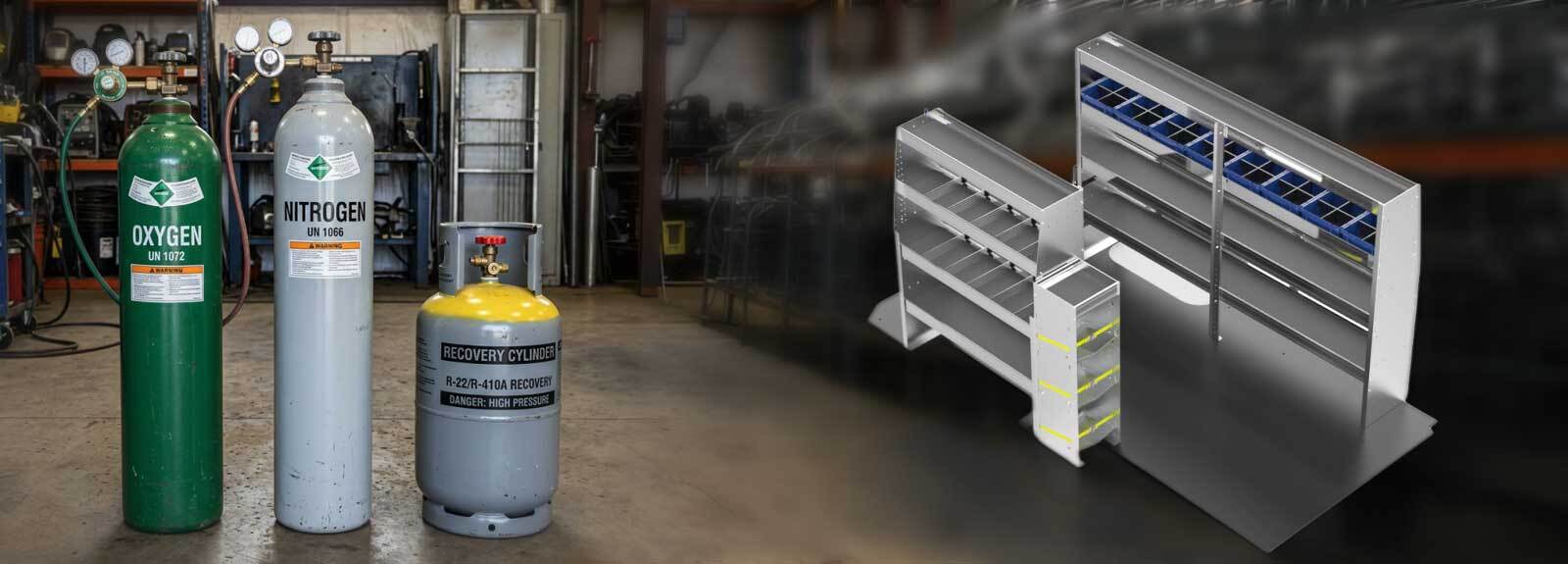
The cylinders HVAC techs typically carry
The risk profile of your van depends on what's inside it. Most HVAC service vans carry some combination of:
- Refrigerant cylinders — R-410A is still in widespread use for servicing existing equipment, but A2L refrigerants like R-454B and R-32 are now the industry standard for new systems following the January 2025 equipment transition. A2L refrigerants are classified as mildly flammable, which has real implications for how they're stored and transported.
- Recovery tanks — cylinders containing recovered refrigerant are still pressurized and need to be treated accordingly, even when partially full.
- Nitrogen — used for pressure testing and purging. Nitrogen cylinders operate at 2,200–2,400 PSI and are non-flammable, but a damaged valve under that kind of pressure can be extremely dangerous. The risk isn't combustion — it's the force of a sudden pressure release.
- Brazing gases — oxygen, Map-Pro, and acetylene are used for soldering and brazing copper pipe. Map-Pro and acetylene are flammable. Oxygen is an accelerant. These require the most careful handling and separation from other stored gases.
Different gases, different risks. That's why a one-size-fits-all approach to cylinder storage rarely works well in practice.
Common cylinder storage mistakes
Most cylinder incidents in service vans come down to a handful of recurring problems:
1. Storing cylinders on their sides
Flammable gas cylinders — including refrigerants and acetylene — must be transported upright. For A2L refrigerants specifically, DOT regulations require that the pressure relief valve remain in contact with the vapor space of the cylinder, which means vertical orientation isn't optional. Cylinders stored on their sides also have a higher chance of rolling and striking surrounding equipment.
2. Leaving regulators attached during transit
A nitrogen regulator that gets struck or sheared in an accident can become a serious hazard. Regulators should always be removed before the van moves, and valve protection caps fitted.
3. No dedicated cylinder storage zones
Cylinders stored alongside loose tools, pipe sections, or heavy parts are more likely to get struck and damaged. A van without defined storage zones tends to develop the kind of mixed-up cargo arrangement where things shift against each other all day.
4. Cylinders positioned at the rear of the van
The rear cargo area is most exposed in a rear-end collision. Mid-van positioning, secured to a bulkhead or fixed rack, is safer.
5. Storing incompatible gases in adjacent brackets
Oxygen and flammable gases — acetylene, Map-Pro — should never be stored in the same rack or directly alongside each other. In a fixed facility, a 20-foot separation or fire-rated barrier is standard. In a van, at minimum they need separate, dedicated brackets with no shared storage zone.
How to secure cylinders properly
A few non-negotiable practices for any HVAC van setup:
1. Always store cylinders upright
Valves at the top, cap fitted when not in use. This applies to refrigerants, recovery tanks, and nitrogen equally.
2. Use proper restraints — not just adjacent gear
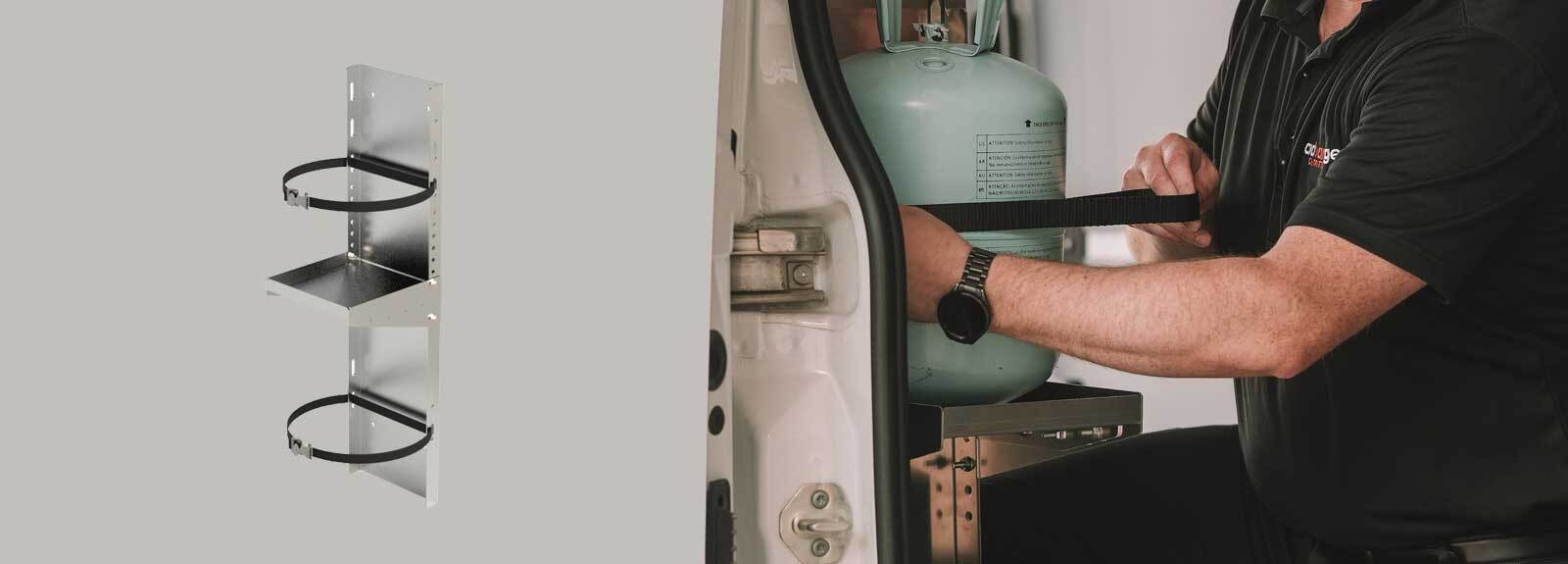
Cylinders need to be secured with purpose-built brackets, holders, or restraints at two points: upper and lower. Friction alone, or the pressure of surrounding equipment, is not a reliable restraint during hard braking or a collision.
3. Remove regulators before driving
Fit valve protection caps on any cylinder without an integrated valve guard. This takes 30 seconds and eliminates one of the more serious transit risks.
4. Separate your gases
Keep flammables and oxidizers in distinct storage positions. Dedicated cylinder brackets make this straightforward and keep the layout consistent across vehicles in a fleet.
5. Carry only what you need
DOT regulations allow up to 440 lbs of combined refrigerant before special placarding requirements apply. Carrying excess refrigerant for no operational reason adds weight and risk without benefit.
Ventilation in an enclosed service van
As most HVAC techs know, ventilation is worth planning for deliberately. In a sealed cargo area, even a slow refrigerant leak can build concentration over time. Most refrigerants and brazing gases are heavier than air, so they pool near the floor rather than dispersing.
Practical steps that help:
- Leave cargo area windows cracked during transport where possible
- Use vented storage cabinets designed to direct leaked gas outside the vehicle
- Install a van partition or bulkhead — it separates the cargo area from the cab and reduces the risk of gas migrating to the driver's space
- Don't transport cylinders you know are leaking or have damaged valves
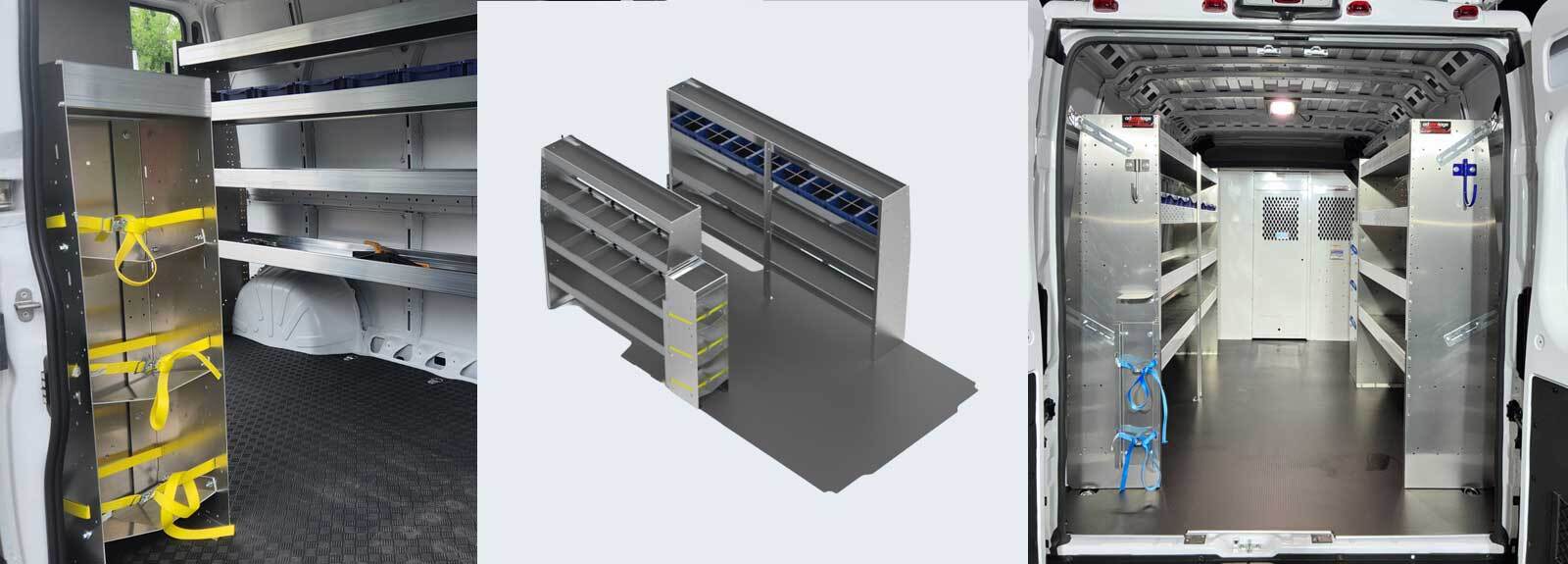
HVAC van storage solutions for safer cylinder transport
The right storage setup makes compliance easier and daily work faster. For HVAC vans specifically, the most useful components are:
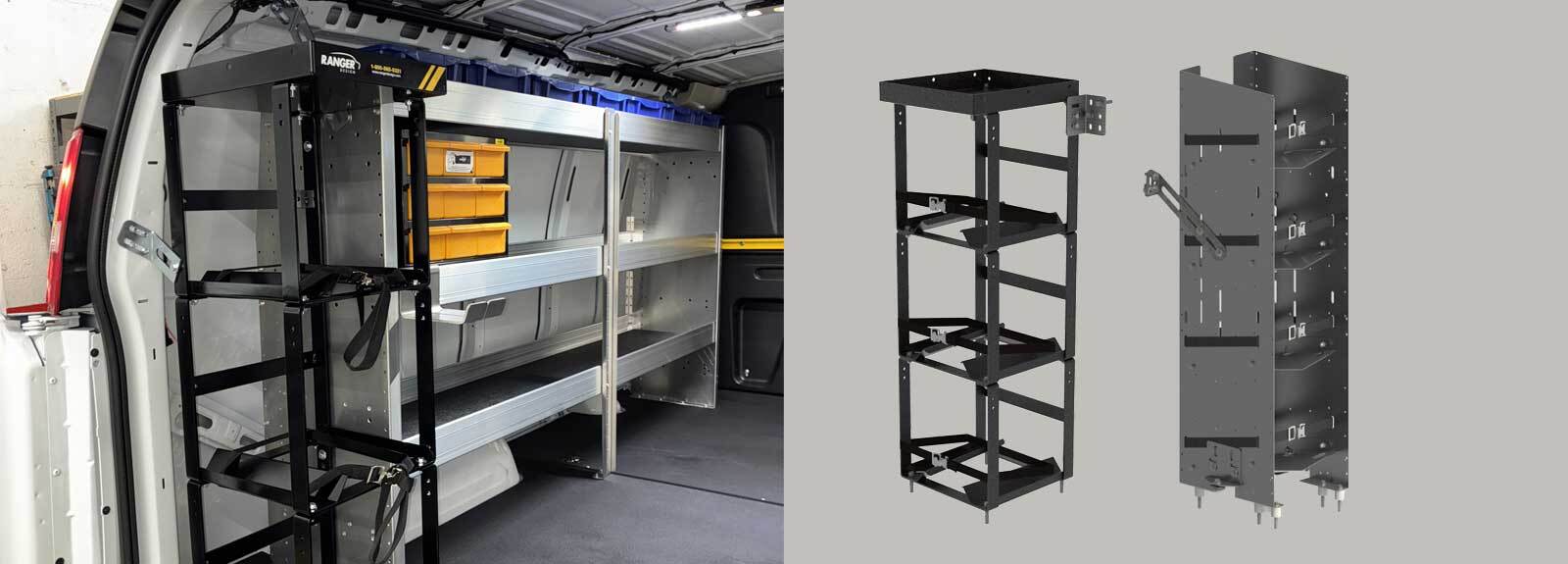
Dedicated cylinder holders and bottle racks — Dedicated cylinder holders and bottle racks — keep cylinders upright and restrained without taking up shelf space needed for tools and parts.
Packd’s HVAC trade package includes small bottle holders for acetylene and oxygen tanks, a large bottle holder for nitrogen, and a refrigerant tower for 30lb tanks. Each holder includes a cap that prevents tools and loose items from falling onto and damaging valves and fittings during transit.
Shelving with defined zones — structured shelving separates cylinders from tools and fittings, reducing the chance of impact damage and making the van faster to work from.
Van partitions — a full or partial partition between cargo and cab adds a layer of separation and reduces noise from cylinder movement during transit.
Modular systems — as your equipment mix changes — particularly relevant right now with the A2L refrigerant transition — modular storage can be reorganized without replacing the whole setup.
Want a setup designed for your trade? Select your van type and browse our HVAC van shelving packages.

Download: HVAC Van Cylinder Storage Safety Checklist
Use this checklist as a quick reference when setting up or reviewing your HVAC van's cylinder storage.
The checklist covers:
- Cylinder positioning and orientation
- Valve caps and regulator removal
- Restraint points
- Gas separation
- Ventilation checks
- Load limits and DOT thresholds
Need help finding the right HVAC van storage? Talk to our van upfitting specialists or browse HVAC van setups.
FAQs
How should refrigerant cylinders be stored in an HVAC van?
Upright, with valve caps fitted and regulators removed before transit. Cylinders need to be secured using dedicated brackets or holders with restraints at two points. For A2L refrigerants, upright transport is a DOT requirement, not just a best practice.
Does it matter that I'm now carrying A2L refrigerants like R-454B?
Yes. A2L refrigerants are mildly flammable, which means they require separation from ignition sources and proper upright storage during transport. The industry transition away from R-410A for new equipment is complete — if you're setting up or refreshing your van, it's worth reviewing your storage layout with A2L handling requirements in mind.
Is ventilation important when transporting cylinders in a van?
More than most people account for. Refrigerants and many brazing gases are heavier than air and collect near the floor of an enclosed cargo area. Vented storage compartments, a van partition, and keeping windows cracked during transport all help.
What's the safest way to transport nitrogen cylinders?
Upright, secured with proper restraints, with the regulator removed and a valve protection cap fitted. Nitrogen cylinders operate at 2,200–2,400 PSI — a damaged valve under that pressure is a serious risk, independent of flammability.
What storage solutions help with HVAC cylinder safety?
Dedicated cylinder racks and bottle holders, structured shelving that creates defined storage zones, and a van partition to separate the cargo area from the cab. Trade-specific shelving packages designed for HVAC vans include these elements in a layout built around how the work actually runs.